
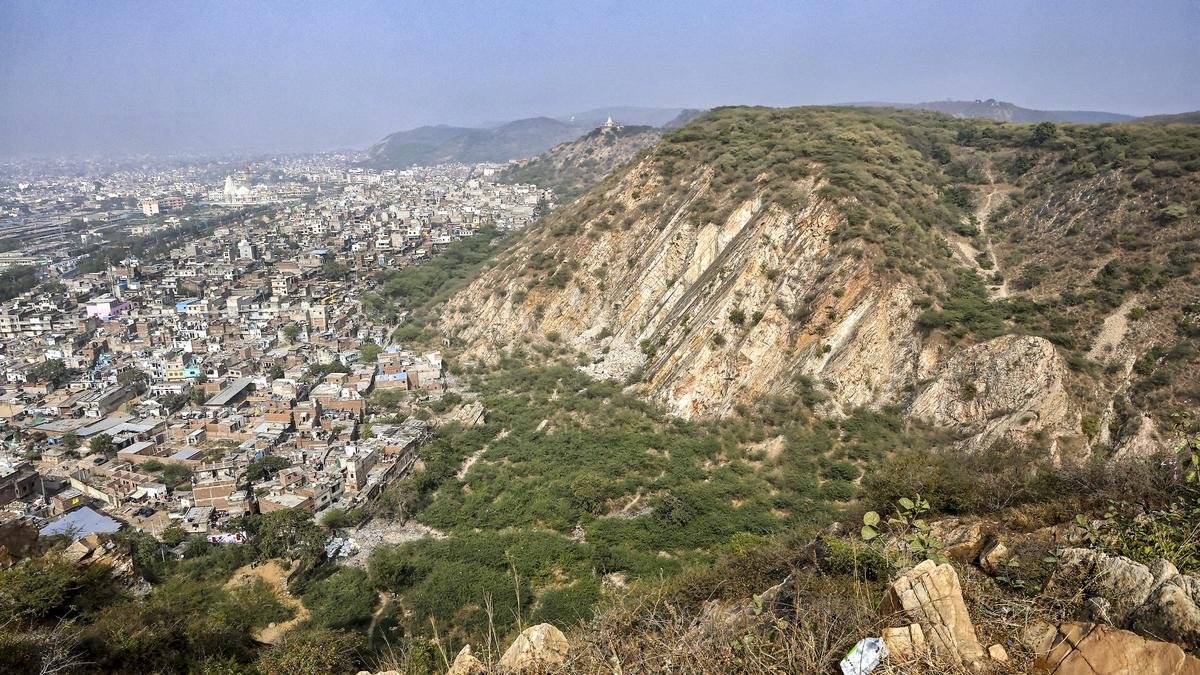
A people-led conservation group, “We Are Aravalli,” revealed a satellite audit showing 31.8% of the Aravalli Range now vulnerable after the Centre’s classification limiting legal protection to hills above 100 meters. The Jaipur announcement on January 5 demands a total mining ban across India’s oldest mountain chain spanning Gujarat to Delhi.
Climate scientist Sudhanshu, linked to the collective, utilized satellite data and Bristol FABDEM elevation models for the analysis. “31.8% of hill areas fall below this arbitrary 100-meter threshold, stripping ecologically vital ridges of protection,” he stated. The Centre’s claim of just 0.19% impact ignores geological reality, per the group.
These low-elevation zones—critical water recharge areas and dust barriers for 30 crore people in Rajasthan, Haryana, and Delhi—face direct threats. Mining here would accelerate Thar Desert expansion, slash groundwater for Jaipur and Gurugram, and spike PM2.5 pollution in Delhi-NCR. The Supreme Court has paused its November directions on the hill definition.
The collective urges declaring the entire range a fully protected zone, abolishing height distinctions between hills and mountains. They seek immediate mining prohibition—except limited rare earth extraction for national security—and cancellation of existing leases in destructive zones like Chittorgarh, Nagaur, Bundi, Kaman, and Sawai Madhopur.
State governments in Gujarat, Rajasthan, Haryana, and Delhi should reclaim damaged hills, restoring soil, water capacity, and native vegetation. “Low areas aren’t wasteland; they shield fertile plains from desertification,” Sudhanshu emphasized.

